

In the context of exports facing many trade barriers and global demand has not recovered strongly, the domestic market steel industry is emerging as the most important driving force of Vietnam’s steel industry. The increase in public investment and signs of recovery from the real estate sector are laying the foundation for a new growth cycle, and at the same time opening up an increasingly clear differentiation between businesses in the domestic market steel industry.
Domestic consumption becomes the main driver
The domestic market steel industry plays a crucial role in shaping future market dynamics.
The domestic market steel industry is essential for Vietnam’s economic development.
Unlike previous periods of growth that were significantly dependent on exports, the steel industry is now driven mainly by domestic demand. According to industry analysis reports, domestic consumption has risen to play an important role as a growth driver in 2025 as export activities are under pressure from increasing trade remedies in many major markets.
As a result, the domestic market steel industry is expected to maintain its growth trajectory.
This shift not only helps businesses reduce their dependence on cyclical export orders, but also facilitates building a more stable and sustainable growth foundation in the long term.
Public investment and real estate create traction for steel demand
According to experts, two factors that are playing a leading role in domestic steel consumption are public investment and the recovery of the real estate market. The significantly improved progress of disbursement of public investment capital has led to a large demand for construction materials from highways, airports, seaports and urban infrastructure projects across the country.
At the same time, the real estate market is gradually prospering again, especially in segments related to industrial parks and technical infrastructure. This contributes to maintaining a stable demand for steel, creating a foundation for the production activities of enterprises in the industry.
Thus, the domestic market steel industry will benefit significantly from these developments.
Entering 2026, when public investment continues to be identified as one of the pillars of economic growth, the link between the progress of state capital disbursement and domestic steel consumption is expected to become more and more close. The domestic market not only plays a role in consuming products but also becomes a factor that helps businesses be more proactive in inventory management, cash flow and production plans.
Moreover, the domestic market steel industry will reinforce the sector’s stability.
Leading enterprises have an advantage
In the context of market changes, large-scale enterprises, high domestic market shares, and closed production chains are considered the most beneficiary groups. These businesses have the ability to provide stable supply for large-scale projects, effectively control costs, and better convert output growth into profits than the rest of the market.
Consequently, the domestic market steel industry will play a vital role in future competition.
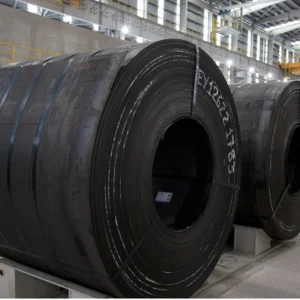
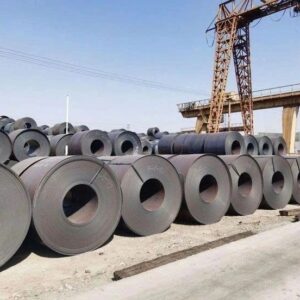
According to ASEANSC, the period 2026–2027 will witness an increasingly clear differentiation in the steel industry. Hoa Phat is expected to directly benefit from the wave of public investment thanks to the expansion of hot-rolled steel coil (HRC) capacity through the Dung Quat 2 project. Meanwhile, Nam Kim is promoting investment with the Nam Kim Phu My project, aiming to improve production capacity from 2026.
This shows that competition in the industry will not only lie in the scale of production but also depend on the ability to take advantage of opportunities from the domestic market and large-scale infrastructure projects.
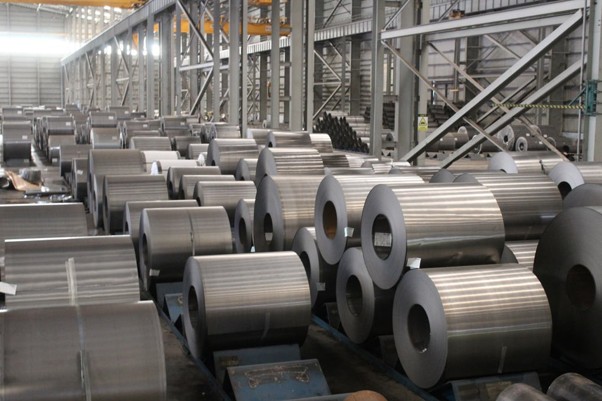
Competition in the steel industry will not only depend on production scale but also on the ability to capitalize on opportunities from the domestic market and large-scale infrastructure projects.
Exports face difficulties, “home” becomes the main battlefield
In recent years, a series of anti-dumping investigations and technical barriers in the international market have put significant pressure on Vietnam’s steel exports. Therefore, focusing on exploiting the domestic market is considered a reasonable strategy to maintain growth momentum in the new period.
Overall, the domestic market steel industry is crucial for ensuring the sector’s competitiveness.
Analysts believe that as domestic demand continues to grow thanks to key infrastructure projects and the recovery of the real estate sector, businesses with advantages in production capacity, distribution networks and cost control will have more opportunities to expand market share.
A new growth cycle is taking shape
Although the world steel raw material market is still under pressure from high iron ore inventories and consumption demand has not really broken through, the outlook for Vietnam’s steel industry is being supported by an increasingly solid domestic foundation.
The combination of public investment, real estate recovery and the need to build infrastructure is creating a new growth cycle for the steel industry. During this period, the domestic market is not only a place to consume products but also a strategic “platform”, helping businesses maintain growth and improve their resilience to fluctuations in the global market.
Ultimately, the domestic market steel industry will continue to evolve with the changing landscape.
In conclusion, the domestic market steel industry is poised for significant advancements in the coming years.
See some chemicals for the steel industry here: https://dk-chemicals.vn/
See some of our other products here: https://dk-metalsurfacetreatment.com/san-pham-cong-ty-tnhh-hoa-chat-d-k/